
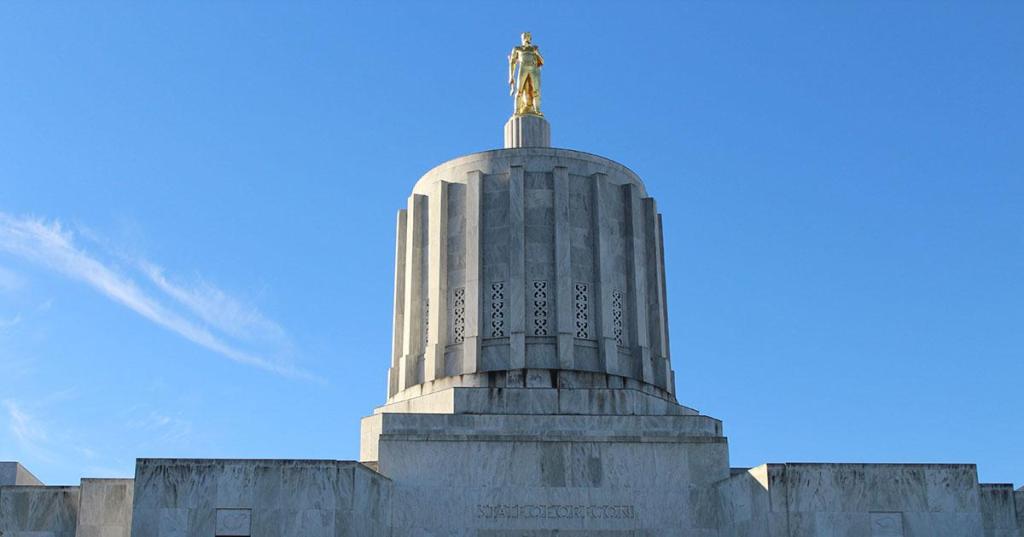
House Bill 3365, sponsored by three state senators and five house representatives including our very own Sarah Finger-McDonald, aims to arm students with environmental knowledge and help them in developing their future careers. This act, if implemented, would create laws that would require the revision of academic content standards to “include an interdisciplinary approach to sustainability and climate change across all subjects for which academic content standards are established” (HB 3365, 83rd Oregon Legislative Assembly, 2025 Regular Session). This bill would alter the State’s education standards to better prepare students for the economic future that will be brought on by the changing climate throughout their lifetimes.
Would this add more to teachers’ workloads?
No. The work that would be needed to enact this bill is taken on by the State Board of Education, which already periodically revises and updates curriculum standards. The bill would require these updates and revisions to include subject-relevant climate education standards, and the responsibility of adding this into the curriculum is not given to teachers.
What does this mean for students?
This bill would ensure that climate education is given wherever relevant, no matter the class subject. To simplify: climate change and environmental science would no longer be covered only in science classes. Instead, CTE classes (in which our school is known for its excellency and immersion) will also include a curriculum around sustainability practices, projected climate-created careers, and natural resource management. For example, an engineering class’s curriculum would then include sustainable engineering practices and learning about infrastructure needs created by climate change. These small changes in curriculum will make a lasting impact on students’ preparedness for future careers. As the world changes, our education standards must adapt appropriately, and this is a large step towards that.

 The Crescent Crier