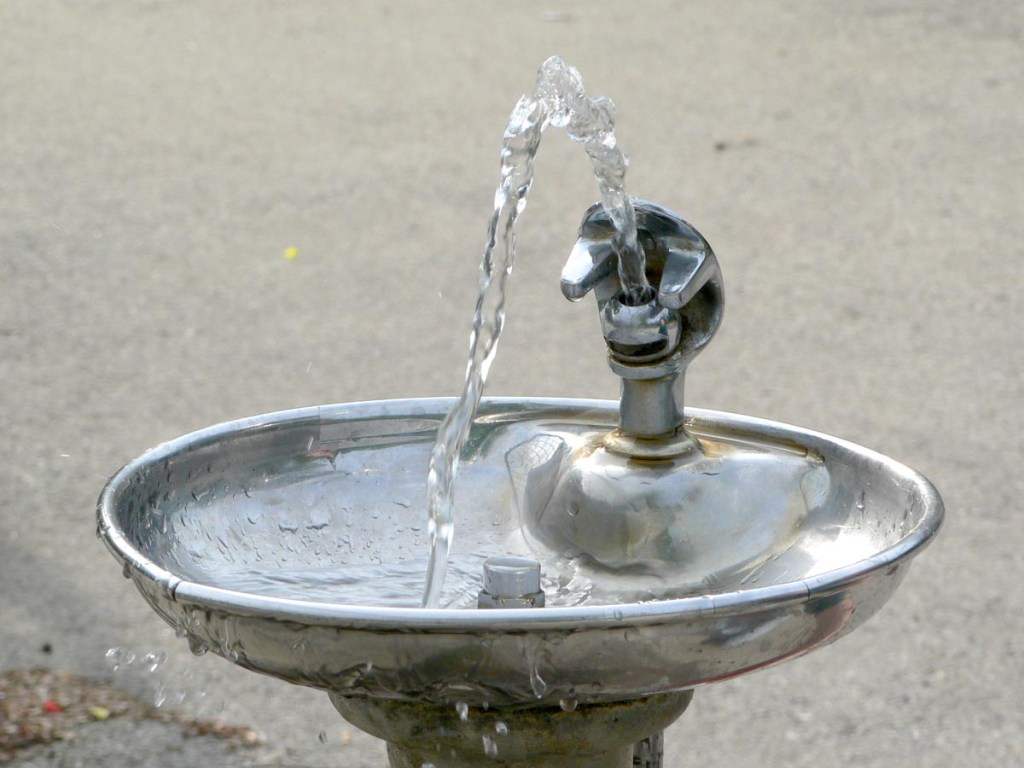
There is a long standing student tradition of side eyeing school water fountains. While it’s common to joke that the hallway water isn’t exactly “gourmet,” we usually assume it’s safe in a pinch. Once I saw some statistics from one of our very own water fountains based on testing in 2023, I realized the urgency and potential danger of drinking the water. Generally, water is unsafe to drink if there are more than 15 parts per billion (PPB) of lead inside; one specific fixture at our school recorded a staggering 12,300 PPB. This number is shocking, so I questioned how accurate it really was. Since then, the school must have done more tests, and several new water fountains have been added, so it can’t be that bad, right?
Lead exposure comes with many threats, possibly causing issues with the brain and nervous system, low iron levels, kidney damage, and much more. Poisoning from lead typically becomes an issue due to corrosion in old pipes, and is pretty common. 1/40 US children between the ages of one and five have had unsafe levels of lead in their blood. It is also estimated that more than 170 million of today’s Americans were exposed to extreme levels of lead during their childhood (PNAS). These high levels of lead are dangerous, especially for children. The EPA has set the maximum contamination level for the toxic metal in regular drinking water at zero (CDC).
To begin my investigation about the possibility of lead in our school, naturally I had to consult Clarence, a well connected student at CV. Clarence pointed me towards Mr. Kanter, a Chemistry teacher and a former water tester. Talking to Mr. Kanter led me to Kim Patten, an Executive Team Cabinet member on the school board. As Director of Operations, this topic falls right into her domain. It turns out that the explanation for the 12,300 figure was both simpler and less cinematic than I expected: Stagnation. She told me that the fixture in question was one that hasn’t been used in years. Without anyone consistently using it, the lead inside of the fixture built up, marinating to higher levels. However, after being flushed out and tested again, the levels were a lot closer to normal.
The water fixtures in the Corvallis School District are tested every 5-6 years, as required by the Oregon Department of Education to keep us safe. The water fixture can’t be operated within 10 hours of testing. If the results are above 15 parts per billion, the fixture is replaced and retested.
Mountain View remains a primary focus within our school district for water quality monitoring, with over $4,000 invested in 76 individual samples. During recent tests there in December, there were nine fixtures that came back with high lead levels, all of which were decommissioned and replaced. As the only district campus utilizing well water, Mountain View is subject to rigorous oversight, with testing occurring quarterly, and occasionally monthly, to ensure student safety.
Kim Patten reassures us that “the most important thing to know is that we take drinking water quality very seriously and we are in compliance with the Oregon Department of Education and Oregon Health Authority for drinking water in our schools.” While the fountains are after all safe from lead contamination, a great rule of thumb suggested by Ms. Patten is to let whatever fixture you are using run for a quick second or two. This ensures that anything potentially sitting in the pipes has a chance to flush out.